What is a cold plunge tub? Three types on sale in the UK
Cold plunge and ice bath describe the same practice: sitting in cold water up to your shoulders. Ice bath stresses the added ice, while cold plunge is often used for tubs cooled by a machine. On the UK market, a cold plunge tub belongs to one of three families. The insulated foldable tub is light, packs into a bag and is cooled with ice. The rigid inflatable tub, made of drop-stitch fabric, usually holds 500 to 800 litres, weighs 16 to 19 kg empty and is often designed for a chiller. The third is a set: a tub plus an electric chiller that cools and filters the water continuously.
So the real choice is how you cool the water. Ice asks for a little planning before each session. A chiller asks for mains power near the water, an electrician's opinion and a permanent spot. If you want a home cold plunge without either, a foldable tub is the lightest way in, and it packs away between sessions.
This ice plunge tub in detail: size, wall, lid and drain
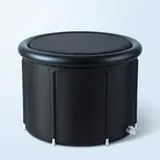
The tub is round and black: 85 cm across and 75 cm high outside, 79 x 68 cm inside, for 330 litres, and 3.8 kg empty. The wall has three layers: PVC inside, against the skin, an aluminium-lined pearl foam in the middle and water-repellent PVC-coated nylon outside. Six vertical support tubes, 20 mm across, slide into sleeves and hold the wall upright. Only the top ring is inflated, with the hand pump supplied: it forms the rim and a rest for your neck. A water-filled cushion on the bottom lets you sit with your back straight and knees bent, the water up to your shoulders depending on your height.
An insulated lid keeps the cold in and leaves out, helped by a thermal dust cover. To empty it, use the side drain hose with its valve, or the bottom plug over a drain. One person puts it up without tools in a few minutes; once dry, it folds into a zipped 75 x 44 cm carry bag. The Ice Bath Tub shop sells it as a kit that is exactly the supplier's box: tub with 6 tubes, lid, dust cover, hand pump, cushion, drain hose and valve, 2 repair patches, 2 seals, carry bag and instructions. No thermometer is included, so bring your own.
| Foldable insulated tub (the kit) | Rigid inflatable tub, chiller-ready | Tub and chiller set |
|---|---|---|
| Capacity: 330 litres | Capacity: about 500 to 800 litres | Capacity: variable depending on the model |
| Empty weight: 3.8 kg | Empty weight: about 16 to 19 kg | Empty weight: variable depending on the model |
| Cooling: ice, with the insulated lid and 3-layer wall | Cooling: ice, or a chiller bought separately | Cooling: electric chiller that cools and filters continuously |
| Electricity: none | Electricity: only with a chiller, installation checked by an electrician | Electricity: mains supply near the water, an electrician's opinion is essential |
| Storage: folds into a 75 x 44 cm carry bag | Storage: variable depending on the model | Storage: tub plus machine, variable depending on the model |
| UK price range: about £30 to £50 for a bare foldable tub, about £89 to £130 for a specialist kit | UK price range: around £399, chiller not included | UK price range: variable depending on the model |
Cold plunge tub UK prices: what each type costs
These are public prices checked on 28 September 2026, given as orders of magnitude rather than quotes. Bare foldable round tubs, with nothing else in the box, sell for about £30 to £50. Foldable kits from specialist sellers, with a cover or accessories, run from about £89 to £130. Rigid inflatable tubs designed to take a chiller sit around £399, before the chiller. For a tub sold together with its chiller, prices vary too widely with the model to give a reliable UK range.
Look at running costs as well. A foldable tub costs you ice before each session. A chiller adds electricity, an electrician's visit and a corner given over to the unit for good. The price of this kit appears in the product block above, VAT included, with free delivery from UK stock.
Keeping a cold water plunge cold without a chiller
Without a machine, the cold comes from the tap and the ice; the rest is about slowing the warming. Keep the lid closed between sessions, set the tub in the shade and add the ice just before you get in. The amount can be worked out: melting 1 kg of ice absorbs 334 kJ, and cooling 1 litre of water by 1 °C takes 4.186 kJ. For 250 litres, the tub filled while leaving room for your body, you need at least:
- from 20 °C to 15 °C: about 13 kg of ice
- from 20 °C to 12 °C: about 22 kg
- from 20 °C to 10 °C: about 28 kg
- from 15 °C to 10 °C: about 14 kg
These are physical minimums with no losses. In practice you need more, as the air, the ground and the sun keep warming the water, and in summer an insulated tub still warms up. No reliable figure says how long it stays cold. Cooler tap water saves a lot: 14 kg from 15 °C against 28 kg from 20 °C to reach 10 °C. Temperatures often quoted sit around 10 to 15 °C; start less cold.
Setting up a home cold plunge: floor, load and draining
Full, the tub holds about 330 kg of water, plus the person, on a circle 85 cm across. It needs flat, stable ground that can carry that load: paving, a garage floor, a compacted patio. In a flat, upstairs or on a balcony, ask your managing agent, freeholder or landlord what load is allowed before filling anything, rather than judging by how the floor looks. Filled to 250 litres, the usual level, it is still about 250 kg of water.
Decide where the water goes before the first fill. The side hose can run to a garden border, a floor drain or a shower; indoors, the bottom plug can sit right over a drain. Never tip the tub to empty it: it is far too heavy, and the support tubes can slip when it tilts. Outdoors, never let the water freeze inside: before hard frosts, empty, dry and fold it.
Cold plunge safety: the rules for every session
See a doctor before your first cold plunge if you have heart disease, high blood pressure, a heart rhythm disorder, a circulatory disorder (including Raynaud's syndrome), diabetes or epilepsy, if you are pregnant or if you are on medical treatment. Never plunge alone: someone present and attentive stays close by. Get in slowly, breathe calmly, start with 1 to 2 minutes and keep your head above the water. The RNLI notes that cold water shock can occur in water at 15 °C or below: it makes you gasp and speeds up the heart, one more reason to get in slowly. Get out at once if you feel dizzy or have chest pain, numbness or uncontrollable shivering.
No alcohol, drugs or medication that makes you drowsy, before or during a session. The tub is not for children, and water stored at home is a drowning risk for them: keep the lid closed when not in use, empty the tub when nobody can watch it and never leave a child near it without an adult. Change the water every 10 to 15 days, as the supplier advises.
Frequently asked questions
Is a portable cold plunge tub worth it?
It depends on how you plan to use it. Without mains power near the water or a permanent spot, a foldable tub does the job with ice and packs into a bag afterwards. If you want cold water ready every day without buying ice, a tub with a chiller fits better, at a very different price.
Do I need a chiller?
No. This tub has no chiller and is not designed to take one: cold tap water, ice, the lid and the insulated wall do the work. Chillers are mostly paired with rigid inflatable tubs of 500 to 800 litres. Any electrical appliance near water needs a suitable installation, so a qualified electrician's opinion comes first.
How much ice should I buy for each session?
It depends mostly on your tap water. For 250 litres, going from 15 °C to 10 °C takes about 14 kg at the very least; from 20 °C, about 28 kg. Buy more in warm weather, keep the lid closed and add the ice just before you get in.
Can the tub stay outside?
Yes, with the lid closed against sun, leaves and dust, ideally in the shade. The supplier gives a range of -20 °C to 60 °C for the material, which is not a water temperature. The water must never freeze in the tub: before hard frosts, empty it through the hose or plug, dry it and fold it into its bag.
How long does delivery take in the UK?
Delivery is free from stock held in the UK, so there is no customs step. Orders are prepared in 1 to 2 business days, then delivered in 2 to 5 business days, as an indication rather than a guaranteed date, with a tracking number by email. You then have 30 days after receipt to return the kit, satisfied or refunded.
Sources
- RNLI, Cold water shock
- U.S. Consumer Product Safety Commission (CPSC), In-Home Drowning Safety Information Center
Our guides are based on the supplier's product listing and public documentation. We have not tested the tub ourselves.